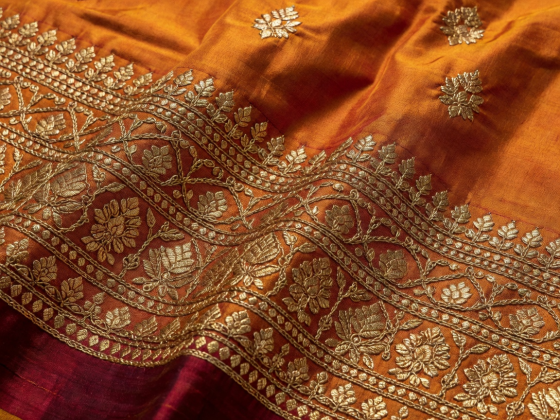
Banarasi silk represents the absolute zenith of handloom weaving in India. For centuries, the ancient city of Varanasi has been home to master weavers who intertwine twisted mulberry filaments with metallic electroplated silver and gold zari to create heirloom textiles revered across the royal courts of the subcontinent.
1. The Four Foundational Varieties of Banarasi Silk
Authentic Banarasi textiles are categorized into four core fabric foundations, each offering distinct drape characteristics, structural tensile strengths, and surface textures:
- Katan (Pure Silk): Created by twisting multiple pure silk threads together to form a stiff, lustrous, high-density yarn. Katan is the supreme choice for bridal sarees and heavy lehenga kalis.
- Kora (Organza with Zari): A gossamer, translucent sheer weave featuring crisp texture created with degummed organza filaments and fine gold brocade booti patterns.
- Georgette (Chiffon-Silk Blend): Lightweight, crepe-twist yarn offering fluid, contemporary drape while supporting dense metallic zari borders.
- Shattir: A versatile, modern lightweight silk blend developed specifically for contemporary evening capes and structured jackets.
"A genuine hand-woven Kadhwa Banarasi saree does not show loose floating threads on the reverse side. Every motif is individually locked and engraved into the base fabric by hand, taking anywhere from 45 days to 6 months per piece."
2. Kadhwa vs. Fekwa: Understanding the Weaving Technique
When investing in a Banarasi masterpiece, discerning collectors distinguish between two primary shuttle techniques:
The Kadhwa (Engraved) Technique
In Kadhwa weaving, each motif (such as the Amru paisley, Jhallar floral vine, or Shikargah hunting scene) is woven independently using separate wooden spools. No loose threads remain on the back of the textile, ensuring the fabric never catches against jewelry.
The Fekwa (Cutwork) Technique
In Fekwa weaving, the zari thread runs continuously from selvage to selvage across the width of the loom. Once woven, the unused back-side floats are manually clipped with shears.
3. The Iconic Motifs and Royal Mughal Iconography
The visual lexicon of Banarasi sarees is deeply rooted in Persian and Vedic motifs. Prominent elements include:
- Kalka / Paisley: Symbolizing fertility, eternal life, and the budding mango tree.
- Jal / Floral Trellis: An intricate grid of creeping vines filled with marigold, jasmine, and lotus blossoms.
- Shikargah: Royal tapestry depictions of royal hunting expeditions featuring elephants, tigers, horses, and forest flora.
- Ganga-Jamuna Borders: Dual-tone contrasting border selvages utilizing silver (Jamuna) and gold (Ganga) metallic filaments.
4. How to Verify Authenticity & GI Tag Certification
With synthetic powerloom imitations flooding commercial markets, genuine Banarasi handlooms bear the official Silk Mark Organization of India tag alongside the Geographical Indication (GI) certification. Genuine handlooms exhibit subtle irregularities in the weave density—the undeniable fingerprint of human artisan dedication.